Finding gods in a fatigued land
Our world used to be filled with spirits. We let them go, losing ourselves along the way.
I worry we’ve forgotten how to make gods.
Your first response may be “What are you on about? There are people vibrating over the great soul of Jesus Christ at this very holiday season,” or better yet, “We don’t make gods.“
We do make gods. This is not a debate disregarding the Angry Abrahamics or some statement about cults. Netflix already did that. This is about the gods that we can meet, and touch, and actually interact with. Gods that we can feel.
You’re probably not used to physical gods. Let me back up.
I was doing my annual Japanese history rabbit hole—this year’s focused on Shinto practices—and learned about Kami (神). Simply put, Kami are spirits, gods, and deities.1 They are nature, the good and bad of it. Oftentimes Kami are personified and anthropomorphized, like the very sun itself, but they can also be a physical force, like the runoff stream in your neighborhood, or a fall breeze that carries with it a reminder of the end of a season.
These differences set Kami apart from the entities we call gods. A Kami is something that actually exists. You can’t talk me out of believing the sun is real, sorry. What makes Kami magical is that I can communicate with the sun. That sun has a face, and it has a story behind it. The sun may still be a flaming ball in the sky—a rock is a rock—but the Kami is the spirit within those objects. Just like we have souls, these objects may very well have Kami.
This brings a certain type of magic to the world. Imagine going on a hike knowing that the forest you’re passing through is guarded by its very own Kami. That forest may feud with the Kami of the river, which separates its two halves. Suddenly, your hike has become a battleground, and you’re forced to pick a side. Do you support the great woodland forest, or are you loyal to the river? And, what would you like in return?
This is the magic that we’ve lost. It’s the bridges to Terabithia, the Narnias and the Middle-Earths. We’ve cast these spirits away to faraway lands, yet we still seek the fulfillment that they brought with them.
I’ve seen a lot of my generation struggle with purposelessness. We look for solutions online, in strange, niche communities or trends that will come and go in a week. Our economy of frankly shit, so the prospect of a regular job seems equally pointless. Our climate is on fire, but that’s such a grand issue that we simply can’t face it individually.
And then there are the lost, forgotten Kami.
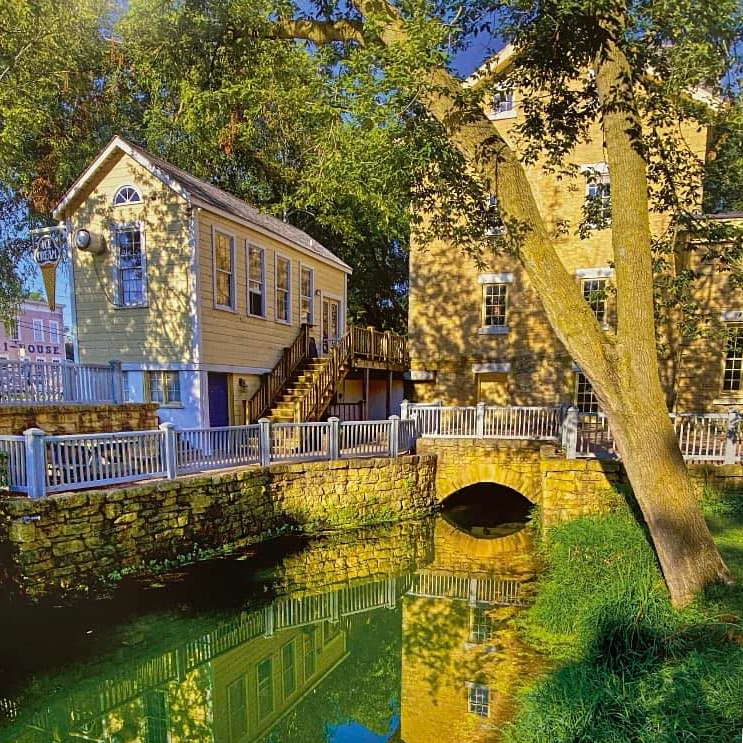
Take a location that felt magical to you. I’ll imagine this old watermill-turned-tavern I used to frequent. There was a certain energy there, I’m sure of it. So let’s name that energy.
My watermill-turned-tavern will be named Wij. I’m not sure why, and that’s fine.
Okay, so. Wij. Now what?
Well, that’s literally it.
I know the energy of Wij very well—it’s that energy that allowed me to name a Kami, or a spirit—so that’s... it.
Suddenly, I found a creature, a force that inhabits this waterway, this mill, and something that ties me to the land. When I need a bounty of a certain still type of creativity, I can call upon Wij, because that’s the energy of Wij. I can visit Wij, and just like that, I have uncovered a little localized spirit.
The best part of this is that I can share Wij with others. They won’t understand Wij until they’ve been under its presence, but I can share it uniquely. And I can try to improve Wij. With enough time and dedication, I can take this currently sleeping spirit and bring back the power and strength that I knew this watermill carried.
If I choose to help Wij, I suddenly have a purpose.
You can’t buy Wij off Amazon. Can’t even find ‘em on Etsy. No, these spirits have to be handcrafted by you. All you need is an initial spark, and the sense of something else, somewhere. Something of wonder.
In Shinto, Kami are discovered. They’re not made—they don’t poof into existence. We’ve forgotten that they’re there, and in that way, we’ve neglected the very magical world we live in. When you have the chance, revisit somewhere that had that special sense to it. Heck, discuss it with others who know the place. I bet they’ve felt what you do. In no time, you’ll start finding spirits all around you. They’re tired, and they need your help.
Shinto has a rich history, with Kami making up its core identity. I hope my brief explanation of Kami can serve as a springboard for your own research. I recommend starting with the Shinto-affiliated Kokugakuin University, and their digital encyclopedia about the subject. ↩