Why Villains Dress Better: How Fashion Creates Division
On Wednesdays, we wear pink.

In the 1930s, designers Karl Diebitsch, and Walter Heck began a unique new clothing line. It would be tight-fitting, formal, and black, with room for the brand’s modern logos on the collar and sleeve. These outfits became some of the most recognizable in Europe. They were worn by the "Schutzstaffel"—the paramilitary of Hitler’s Nazi Party—and were only one of the many infamous uniforms worn by the group. You can imagine this attire with ease: tight overcoats of either black or brown, worn with helmets or caps to signify military prowess, and the bright red symbol slapped onto their arm.
The party knew what it looked like; and more importantly, what it didn’t. Members didn’t wear rags or pink shoes, they were pristine and black. They didn’t wear baseball cats, they wore armored helmets. Their authoritarian attire was one of the most powerful tools the party had to exercise control, and is a prime example of how fashion can be so commanding.
Many works of fiction use a similar tactic to create this clear divide between the hero’s party and the villain’s. Star Wars’ Stormtroopers were heavily inspired by the Nazi Party, while the rugged look of the rebels felt familiar to American viewers. Harry Potter used a dark, grungy aesthetic for villainous groups like the Death Eaters and subversive trickery with Snape in the Sorcerer’s Stone. All of these are designed to help the outside viewer quickly understand the party. It’s a tactic used throughout all of human history to better unify—and discriminate—social groups.
Imagine this: It’s a hot summer day. You’re wearing a green Adidas tank-top to the gym and see one person wearing the same top, but in blue. Everyone else is wearing brands you’ve never heard of. Are you more likely to talk to the Adidas fan first? If you said no, let’s reverse the scenario. You’re in an office complex, and everyone is wearing a suits—except you in your Adidas top. How uncomfortable do you feel now? Do you feel the need to buy a suit before returning?
Most people would say yes, and brands use this out-group derogation all the time in advertising. A certain desire to fit in is one of the core human experiences, and it’s exploited against us all the time.
It’s also an easy way to give shape to a story.
Creating a Fictional Faction
The Nazi Party wanted to shape a group that represented order and homogeneity. That’s why the Nazis wore uniform black. The Rebellion of Star Wars needed to represent diversity and liberty, so the rebels were a mixture of species fighting for freedom—a classic American tale. This group is a more interesting case. By having such a diverse body—not only in their members but in their vehicles, spacecraft, and weaponry—diversity became the uniform. “All are welcome here; we are more than the black-and-white empire.”
Group identity is one of the most important aspects of storytelling. We need to know how we the audience fit in with our heroes. With this in mind, how could you create a story or a group that your audience recognizes at a glance? What we’re trying to create is a type of cohesion, or a consistent image, voice, or message that compliments all other elements. In marketing, this is called brand cohesion. In storytelling, we might call this smart world-building.
To create a cohesive identity, we need to build a bunch of differing visual elements and unify them in some sort of way. You could pick any sort of different elements. Maybe your story is about cooking. If so, you may want to consider the food being made. What do the good chefs cook? How does this compare to their competition? Then, what do both parties’ restaurants look like? What names do they give their recipes? Those elements could be the most relevant to your story.
Here are four categories that work for most cases: Color, clothing, quotes, and characters.
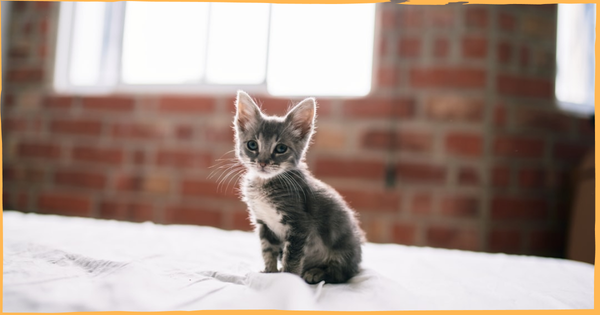
Let’s make up a faction of power-hungry house cats to give this a try. Seems reasonable enough.
The Catzi Party
Color
Let’s start with color. Any color can be made to feel oppressive or liberating, so it’s easier to define a group’s color scheme by also defining what it isn’t.
If this is for all house cats, we’ll need to design for all types. House cats aren’t blue, green, or red. They aren’t pink or yellow—but they have pink or yellow eyes. Most cats are either orange, white, or a shade of black. Maybe a combination of these colors should be present in their propaganda.
Clothing
Next, clothing. Clothes serve a lot of roles in modern day society. They’re decorative and also utilitarian, giving us warmth, protection, or even physical performance boosts.
Cats don’t particularly wear clothes, so this will be tougher. Cats do like to stay clean, and I can’t imagine a cat sacrificing its agility. So maybe some low boots. We still need to get that power-hungry message across, so let’s use our colors and take inspiration from history—giving them an arm patch. A collar would suggest ownership, so maybe lesser cats or dogs have to wear this symbol on a collar.
Quotes
Onto quotes. What would a cat say to denote power? “I want to be your pet” won’t do. “I want love, dry kibble more than mouse meat.” A power-hungry cat may want to force its owners to go through its endeavors. Enduring struggles. “You will be my litter box.” “We are stronger than the spray bottle.”
Characters
Finally, characters. Who leads this cat party? Who wouldn’t? We’ve established that all cats are created equal, so perhaps an oligarchy or democracy is used—but only for cats? Maybe we lean into the unexpected and make a brilliant, 7-pound feline serve as supreme meowster?
And like that, we have a Catzi Party.
Factions and Fashion Today
By focusing on what the party fights against, we quickly find visual cues to create a group identity. This is something we see today in modern politics—groups lacking identity being swiftly overpowered by parties with a clear appearance.
It’s a tool that should not be taken lightly, and something to watch for in day-to-day life. “Why do I want this hat?” Because I identify with it—or because the group I want to identify with wears it? There’s no harm in wanting to fit in, unless it’s not a want but a need.
Writing Exercise
Try the CCQC (Color, clothing, quotes, character) technique out for yourself. Put together a fictional group, maybe a brand, a government, or just a high school club, that needs some identity. Firstly, write about what they wouldn’t identify with. Then, look at what remains and jot down some notes. When you’re ready, write a paragraph or two from your new organization’s perspective: A leader training an initiate, or a rather awkward press release. Have fun, and get creative! When you’re done, feel free to drop your new org in the comments.